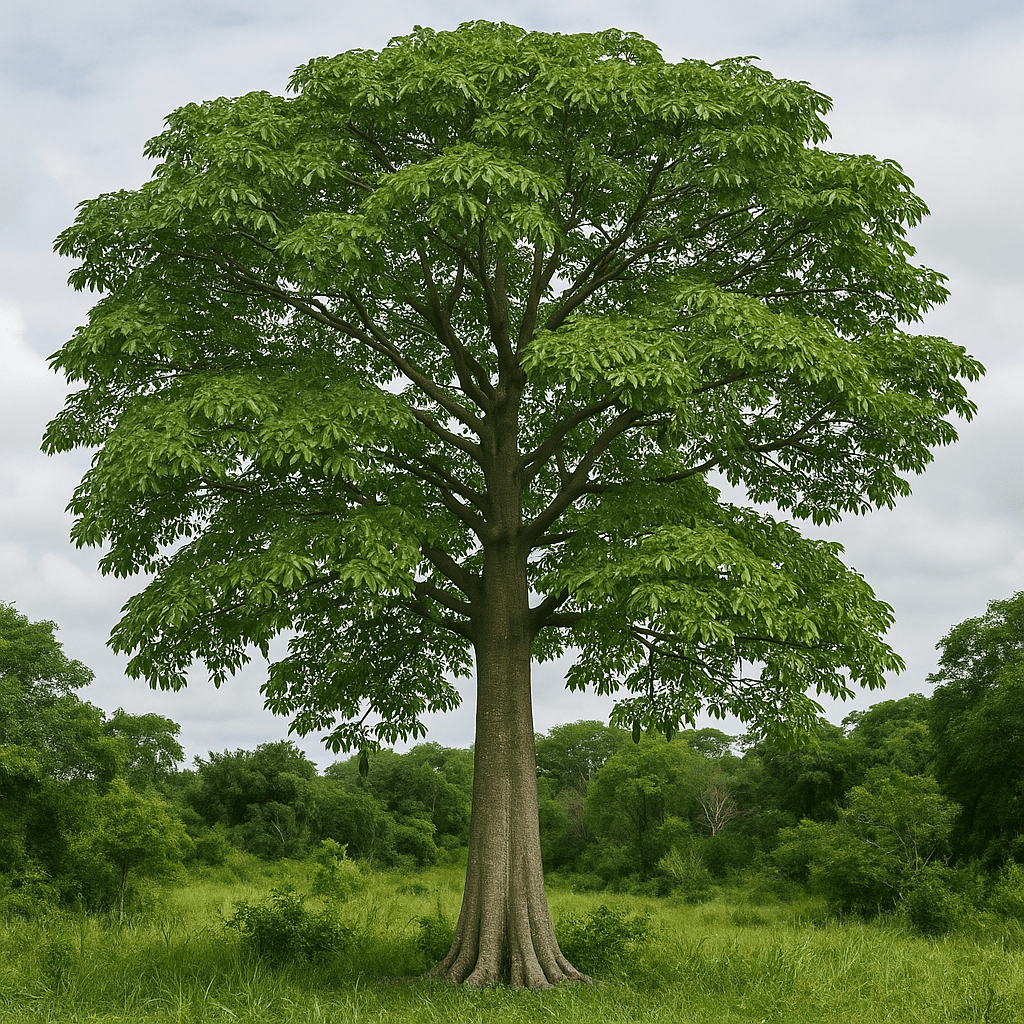
Ceiba pentandra is a massive deciduous tree with a buttressed trunk, whorled umbrella-like branches, spiny young bark, palmately compound leaves, fragrant night-blooming flowers, and woody capsules containing silky kapok fibers.
Bark, leaves, roots, and sap are used in traditional medicine to treat digestive issues, fever, coughs, wounds, hypertension, respiratory problems, and as an abortifacient.
Young leaves, flowers, and seeds are edible, with seeds yielding oil, and wood ash sometimes used as a salt substitute.
The tree is sacred in Mayan culture, symbolically links the underworld and cosmos, serves as a ceremonial or meeting tree in West Africa, and provides wood for masks and carvings
Kapok trees are grown from seeds or cuttings in tropical, well-drained soils, require space and light, can be intercropped, and bear fruit after 3–4 years with full fiber production in 7–10 years.