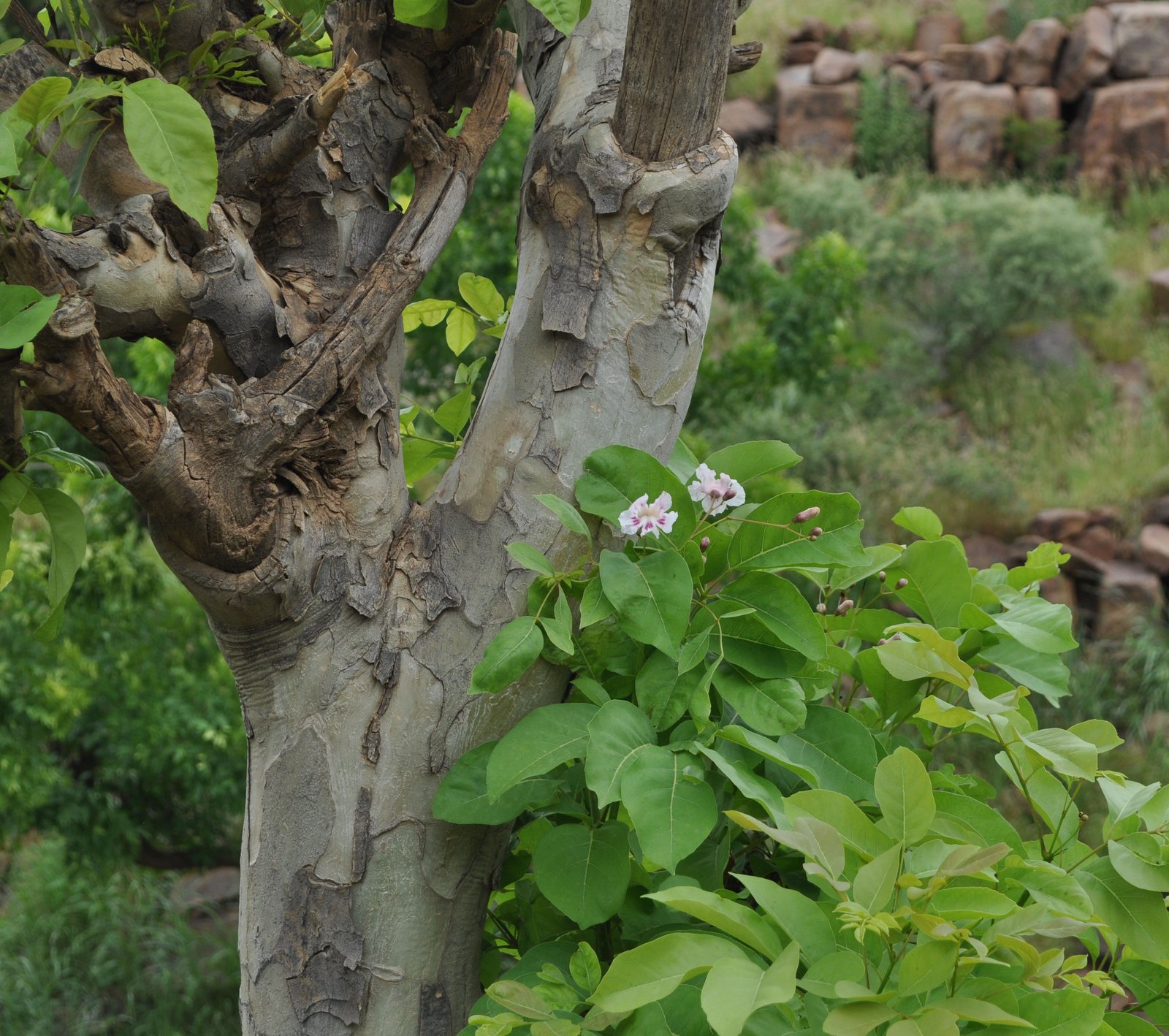
Stereospermum kunthianum is commonly known in English as Pink Jacaranda or Corky-bark. It is found across different African regions, it is also traditionally referred to as a “witch-doctor tree” or “wand of the sorcerer,” reflecting its strong association with traditional healing practices.
The plant is highly valued in African traditional medicine, with almost all parts—bark, roots, and leaves—used therapeutically. Stem bark extracts are used to relieve pain, inflammation, and rheumatic arthritis, with studies showing anti-inflammatory effects comparable to standard drugs. Bark and root decoctions are widely used for respiratory conditions such as bronchitis, pneumonia, and coughs, while powdered bark is applied to wounds and ulcers. It is also a well-known remedy for diarrhea and dysentery. Traditional use for childhood convulsions is supported by experimental evidence showing anticonvulsant activity. Additional uses include treatment of venereal diseases, leprosy, use as a diuretic, and as a vermifuge.
In some African regions, especially Guinea, the long, twisted fruit pods are edible. Beyond food, the bark is chewed to relieve coughs and is sometimes used as a cosmetic lip stain, giving a reddish-brown color. The wood is hard and durable, making it suitable for mortars, tool handles, and construction. The leaves are also used in traditional dyeing.
Stereospermum kunthianum is a fast-growing deciduous tree commonly found in savanna regions, rocky outcrops, and around termite mounds. It grows best in full sun, tolerates sandy or clay soils, and thrives in areas with 350–1,400 mm of annual rainfall. Although it can be grown from seed, germination is often poor, so root suckers are preferred for propagation. Seed germination can be improved through scarification or acid treatment and by using appropriate substrates such as black soil mixed with wood shavings.