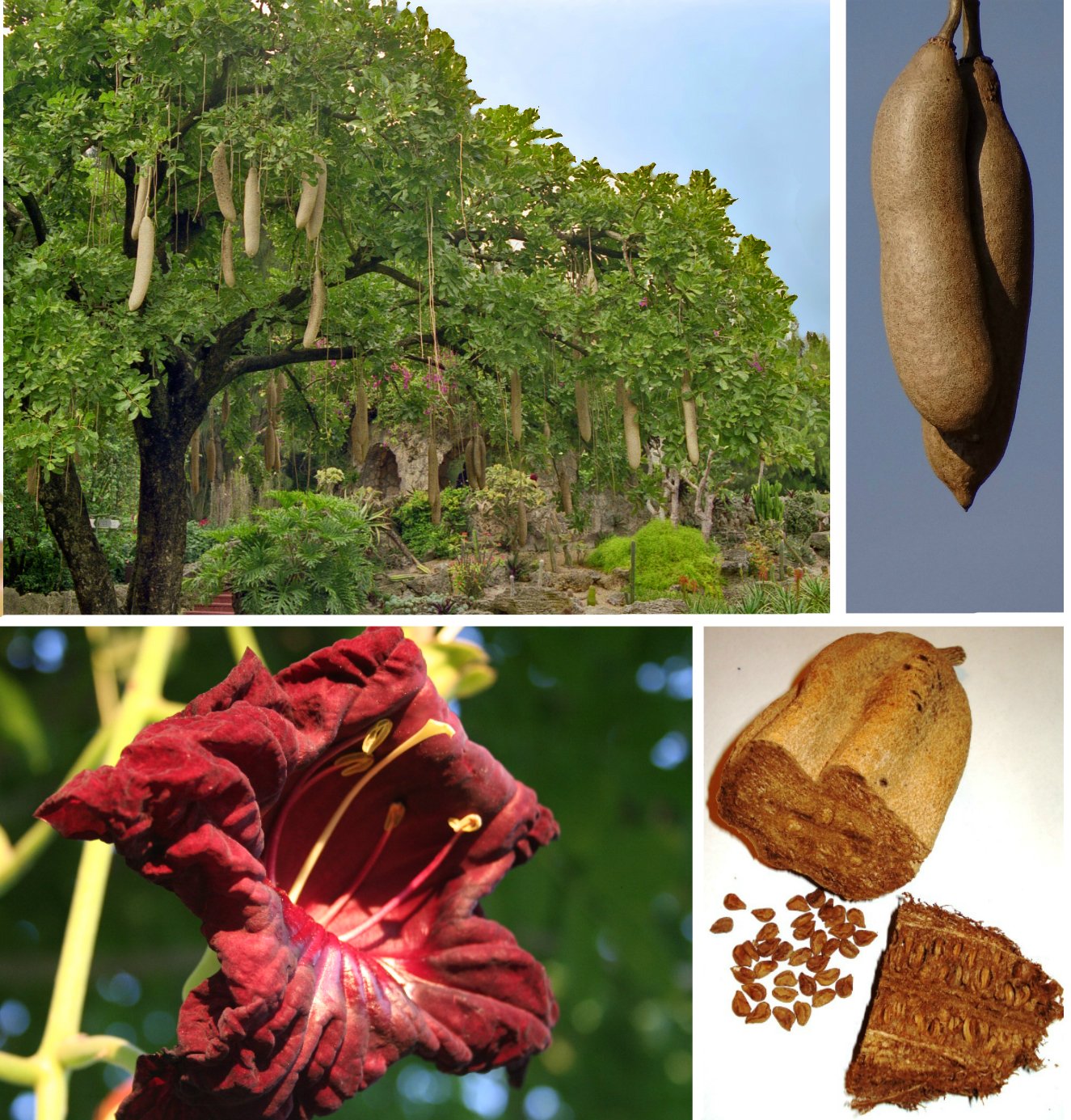
Kigelia africana is commonly known in English as the Sausage tree or Cucumber tree, named after its large, hanging, sausage-shaped fruits. Among the Tiv people, the tree is traditionally recognized for its strong medicinal and spiritual importance and is commonly identified by its distinctive fruit rather than multiple external names.
Among the Tiv tribe, Kigelia africana is highly valued in traditional medicine, with the bark, fruits, and roots used to treat a wide range of ailments. Preparations from the fruit and bark are commonly applied to skin conditions such as boils, fungal infections, rashes, eczema, and chronic sores. Powdered bark or fruit is used for wound healing, ulcers, and abscesses.
The plant is also used in reproductive and gynecological treatments, including remedies for sexually transmitted infections and conditions affecting fertility. Decoctions of the bark and roots are taken for digestive problems such as stomach pain, diarrhea, and constipation. In Tiv traditional practice, the tree is also regarded as effective for body swelling, inflammation, and pain, and it is sometimes used as a protective medicinal plant against serious illnesses.
In Tiv land, the fruit is not eaten raw due to its harmful effects, but parts of the plant may be processed for non-food medicinal preparations. The leaves are recognized for their nutritional value, especially their mineral content, and may be used indirectly in traditional remedies. The large fruits are commonly observed being eaten by wild animals, reinforcing the tree’s ecological importance.
Culturally, Kigelia africana holds spiritual significance among the Tiv people. The fruits may be kept in compounds or hung in strategic locations as protective charms believed to ward off harm, illness, or negative spiritual influence.
Kigelia africana grows well in riverine areas, farmlands, and open savanna zones common in Tiv land. It prefers full sunlight and moist but well-drained soils, though it can tolerate dry conditions once established. The tree is usually propagated by seeds collected from fallen fruits. Due to its large and heavy fruits, Tiv farmers traditionally avoid planting it close to homes, footpaths, or communal gathering areas.