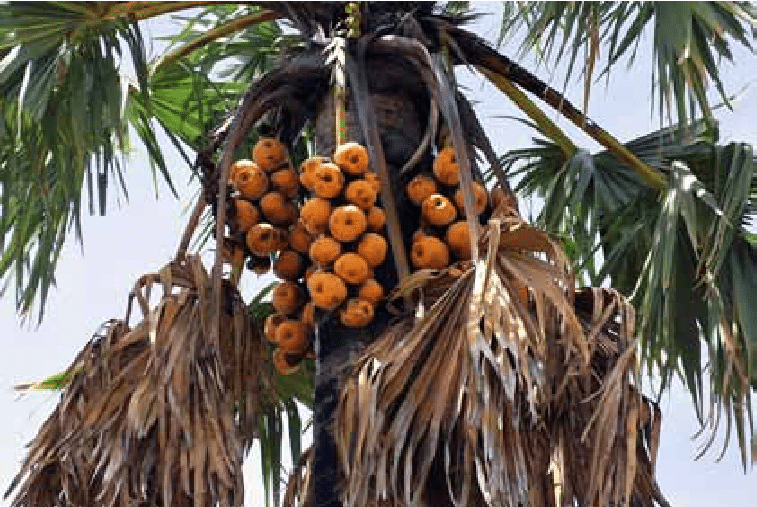
Borassus aethiopum is commonly known in English as the African Fan Palm, African Palmyra Palm, or Deleb Palm. Among the Tiv people, it is recognized as a multipurpose savanna palm, valued more for its uses than for a fixed external name, and is easily identified by its tall trunk and large fan-shaped leaves
In Tiv traditional medicine, different parts of the palm are used to treat a variety of ailments. Root decoctions are taken for stomach problems, intestinal parasites, chest conditions, asthma, and as a diuretic. Leaves are used in treating skin diseases and general body weakness, and are sometimes associated with vitality-enhancing remedies. Preparations from the fruit and seedlings are used for respiratory illnesses and childhood diseases, while the hard seed covering is valued for remedies targeting inflammation. These uses align with studies showing antioxidant, anti-inflammatory, and antimicrobial properties.
Among the Tiv people, Borassus aethiopum is an important subsistence and food-security palm, especially during dry seasons and periods of scarcity. The fruit pulp is eaten fresh or processed; the orange, fibrous flesh may be consumed raw, dried, or cooked into porridge, while immature fruits contain a sweet, jelly-like pulp enjoyed as a seasonal food. The germinating seedlings (sprouts) are highly valued and are eaten cooked or processed into flour, providing a filling and nutritious food source. The sap, tapped from the palm, is consumed fresh or fermented into palm wine, which plays a role in Tiv social life and traditional gatherings. Although the palm heart (palm cabbage) is edible, it is rarely harvested because removing it kills the tree, and Tiv practice generally favors sustainable use of the palm.
Borassus aethiopum is a slow-growing but extremely long-lived palm, often living for over a century. It thrives naturally in savanna landscapes common to Tiv land, especially in areas with access to underground water. The palm is usually propagated by seed, which must be planted directly in the ground due to its long taproot. Germination is slow, taking several months before roots emerge and up to a year for the first leaf to appear. The tree requires full sunlight, prefers sandy or alluvial soils, and is highly drought-resistant once established, although young plants are vulnerable to fire. It may take 10 years to form a visible trunk and several decades before flowering.