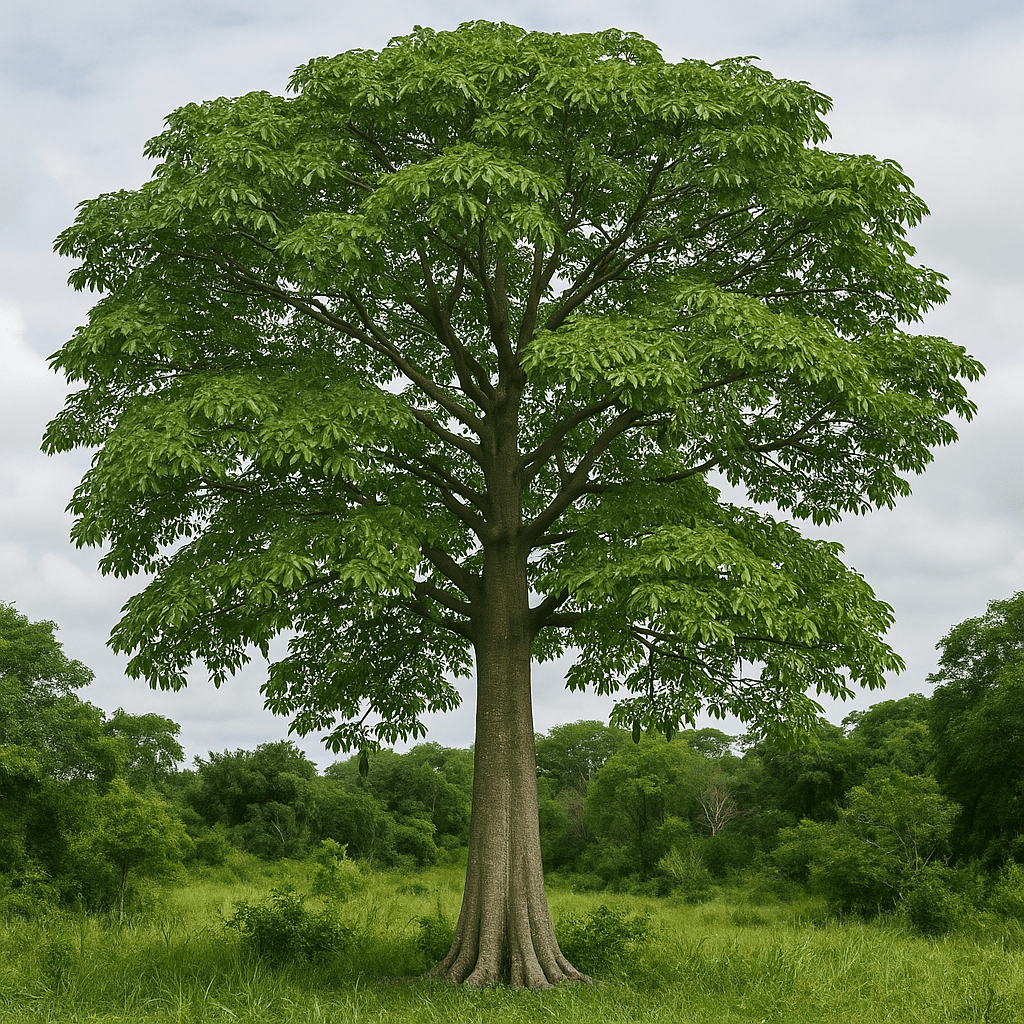
Bombax costatum is a highly versatile, drought-resistant tree native to the savannas and dry woodlands of West Africa (Senegal to Cameroon). It is a key multi-purpose tree used extensively for food, traditional medicine, and, to a lesser extent, fiber and timber.
Among the Tiv people, Bombax costatum is an important medicinal tree, with bark, roots, and leaves used for a wide range of treatments. The bark is commonly prepared as a decoction for skin diseases, diarrhea, and dysentery, and is also applied to wounds to promote healing. Bark preparations are taken as a diuretic and used for fever, body pain, abscesses, and hernia. The roots are used in remedies for epileptic conditions and as a tonic to restore strength and reduce fatigue. The leaves are used for treating headaches, jaundice, and measles, and are applied externally as an emollient to soothe the skin. In ethnoveterinary practice, pounded leaves are used to manage retained placenta in livestock and as a traditional treatment for snake bites.
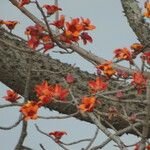
Flowers dried and cooked as soup
Primarily via direct seeding, though wildlings are also used.