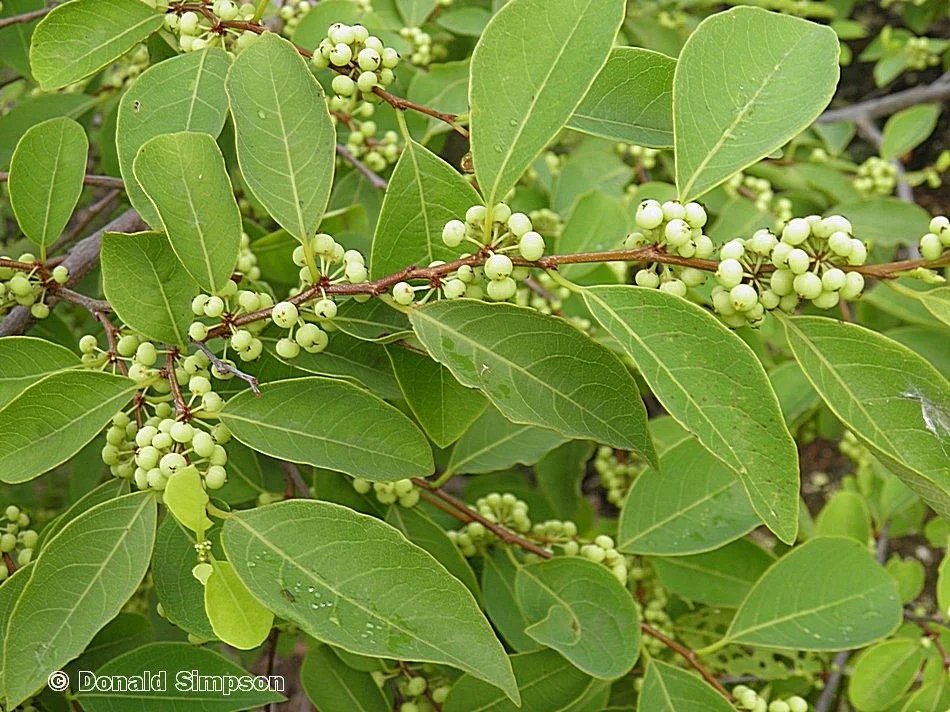
Flueggea virosa is commonly known in English as the White Berry Bush. Among the Tiv people, it is recognized as a useful multi-purpose shrub, valued for both medicinal properties and edible fruits.
In Tiv traditional medicine, Flueggea virosa is highly regarded. The roots and leaves are used for treating malaria, stomach aches, pneumonia, and general weakness. Root decoctions are taken for urinary, liver, and kidney issues, and for infections such as venereal diseases. The plant is also applied for pain, inflammation, and skin conditions, including eczema and rashes. Additionally, it is traditionally used for convulsions/epilepsy and as a snake antivenin. Modern studies support its antioxidant, antiviral, and potential anticancer properties, aligning with traditional Tiv uses
Among the Tiv, the small white fruits of Flueggea virosa are eaten, especially by children. They can be consumed fresh, boiled, or incorporated into porridge or sauces. The fruits are juicy, slightly sweet, and contain vitamin C and carbohydrates, providing a minor but useful nutritional source.
Flueggea virosa is a fast-growing, multi-stemmed shrub or small tree, reaching 4–6 meters. It thrives in full sun to partial shade, commonly found on forest edges, woodlands, and disturbed farmland areas in Tiv land. It prefers well-drained sandy or clay-sandy soils and is drought-tolerant once established. The plant can be propagated via seeds or cuttings, with seeds germinating more reliably after passing through animal digestion, though this is not strictly necessary. In Tiv practice, it is also used for living fences, firewood, and making baskets or simple trap