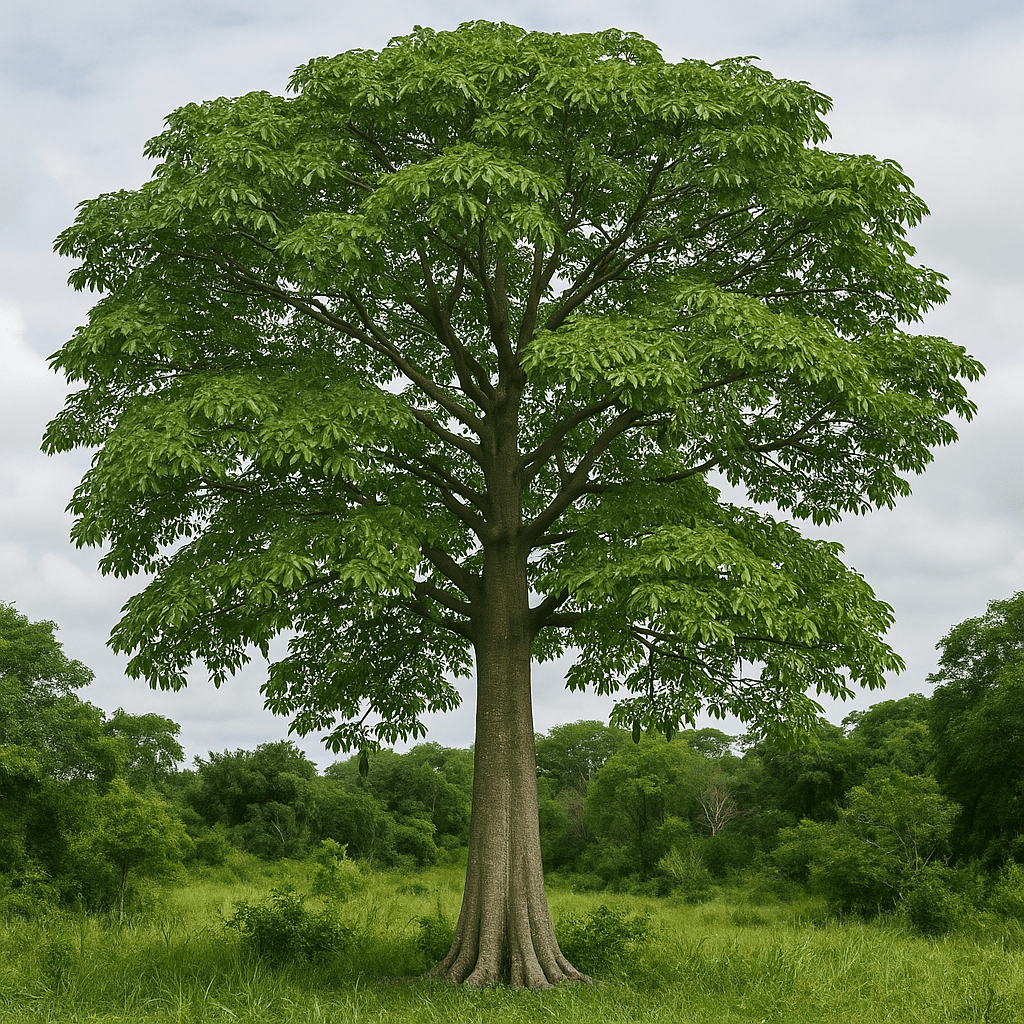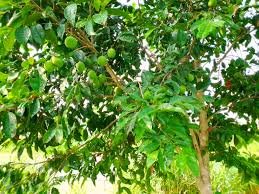
Irvingia gabonensis is a large, evergreen forest tree native to the humid lowland forests of West and Central Africa. It produces mango-like fruits with highly valued edible pulp and oil-rich seeds (kernels).
Various plant parts are used in African traditional medicine:
Bark: Decoctions are used for diarrhea, dysentery, gastrointestinal infections, yellow fever, and as an antidote to poisoning. Bark paste is applied to wounds and sores and used to relieve toothache.
Seeds: Used traditionally to manage diabetes and obesity by suppressing appetite.
Leaves: Used to treat fever and, when mixed with palm oil, to control hemorrhage in pregnant women.
Ogbono (Draw) Soup: Dried and ground kernels are used as a thickener and flavoring agent in traditional soups.
Dika Bread: Processed kernels are formed into solid cakes (also called odika or Gabon chocolate) for long-term storage.
Fruit Pulp: The sweet-tangy pulp is eaten fresh or processed into juice, jam, jelly, and wine.
Edible Oil: Oil extracted from the seeds (solid at room temperature) is used for cooking.
Snack Use: Seeds may be eaten raw or roasted.
Traditional Rituals: Bark and other plant parts are sometimes used for spiritual protection and treatment of spiritual ailments.
Cultural Significance: The tree is preserved on farms due to its importance as a staple food source, particularly for Ogbono soup.
Seed Propagation: Seeds are extracted from ripe fruits, dried for at least two days, and planted.
Seed Selection: Seeds are selected from high-yielding trees with large fruits and good pulp quality.
Vegetative Propagation: Budding, grafting, and marcotting (air-layering) are used to reduce the juvenile period, with fruiting in 3–4 years (compared to 7–10 years from seed).
Wildlings: Naturally occurring forest seedlings are commonly collected and transplanted to farms.