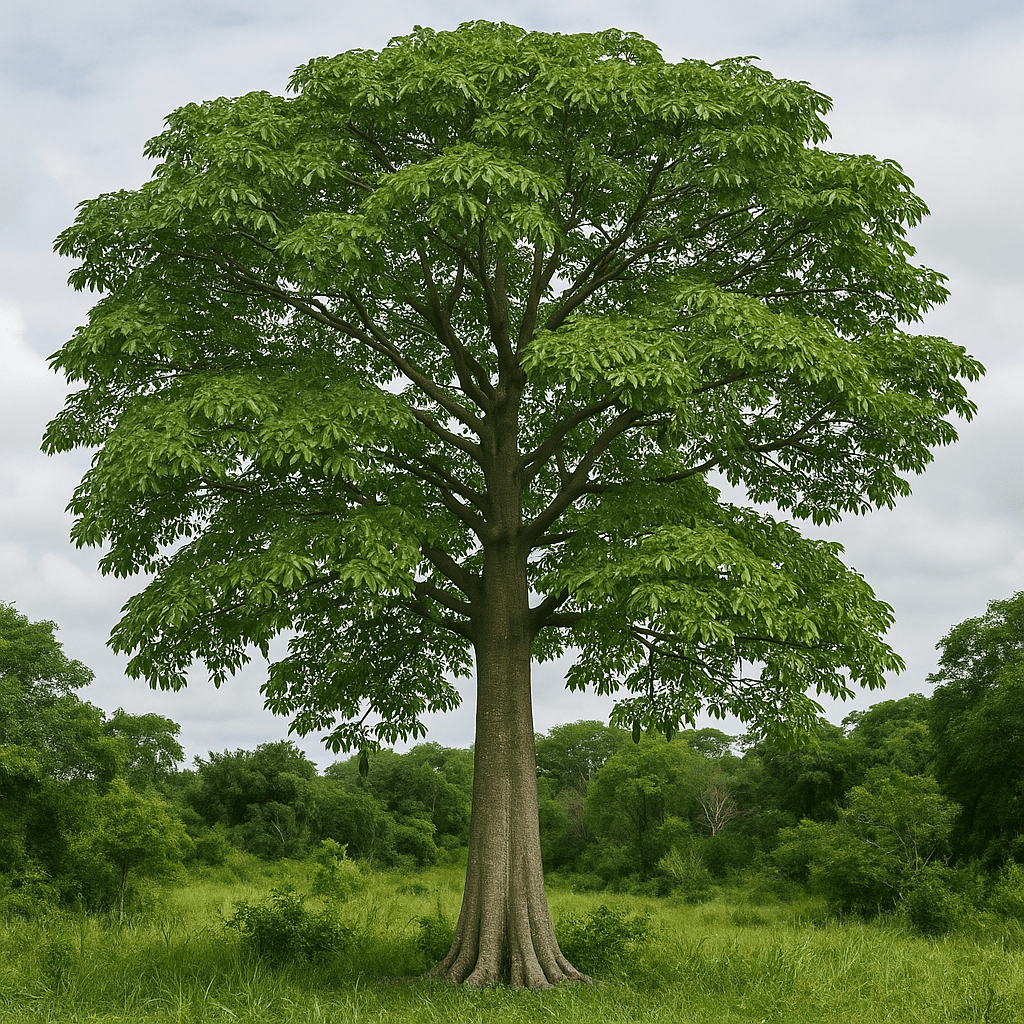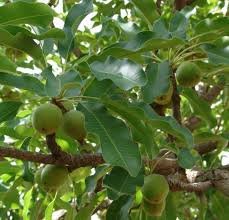
Vitellaria paradoxa is a large, slow-growing, drought-tolerant tree native to the sub-Saharan savanna. It produces edible fruits with fat-rich kernels used to make shea butter and is a keystone species in agroforestry and traditional African landscapes.
The tree is considered a “tree of life” with multiple therapeutic applications:
Bark: Decoctions used for diarrhea, dysentery, stomach aches, jaundice, eyewash, leprosy treatment, and as a bath to assist childbirth.
Leaves: Treat headaches, eye infections, and are used in vapor baths.
Roots: Used for digestive issues in humans and as veterinary medicine.
Shea Butter (Fat): Applied topically for rheumatism, joint and muscle pain, dermatitis, and wound or burn healing.
Latex: Used to treat sores.
Shea Butter / Cooking Oil: Extracted from nuts (kernels) and used as a dietary fat, cooking oil, and cocoa butter substitute in confectionery.
Fruit Pulp: Eaten raw; sweet and nutritious.
Flowers: Occasionally fried into fritters.
Caterpillars: The leaves host the caterpillar Cirina butyrospermi, which is eaten dried or fried.
Sacred Tree: Considered sacred in many communities; often protected from felling.
Ceremonial Uses: Shea butter is used in marriages, newborn blessings, and other rites symbolizing protection and prosperity.
Traditional Medicine & Spirituality: Employed by healers in rituals related to childbirth, lactation, and spiritual illnesses.
Seed Propagation: Traditional method; juvenile period is long (10–25 years).
Vegetative Propagation (Grafting): Side cleft grafting in May ensures faster fruiting (2–3 years) with up to 86% success.
Cuttings: Rejuvenated shoot cuttings treated with rooting hormone (IBA) can root with ~75% success.
Tissue Culture: In vitro micro-propagation is being developed for large-scale planting.