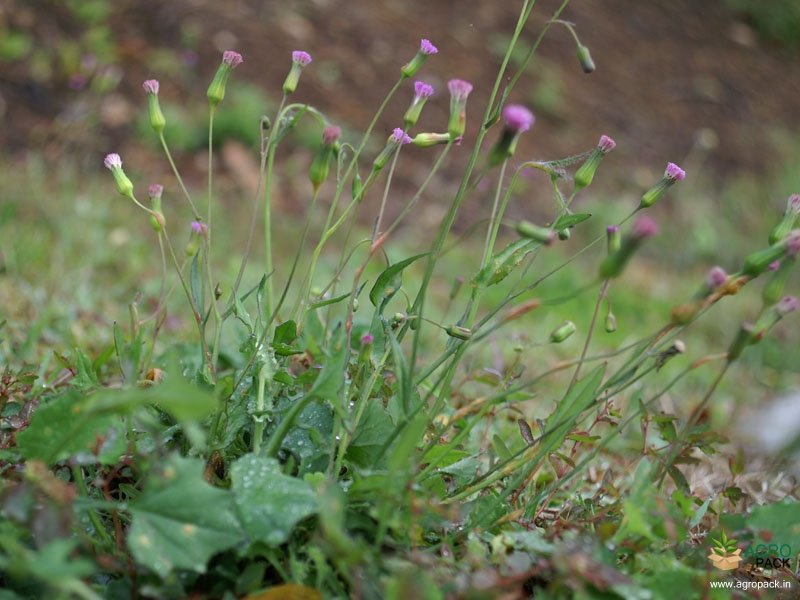
Emilia coccinea is a fast-growing, annual tropical herb with tassel-like, vibrant red flowers. It thrives in disturbed areas, gardens, and open savannah-like habitats, preferring full sun and well-drained soils.
Widely employed in traditional medicine across Africa, India, and Southeast Asia:
External Treatments: Wounds, abscesses of the breast, sores, skin infections (craw-craw), yaws, ringworm.
Internal Treatments: Coughs, rheumatism, fever, asthma, jaundice, and dysentery.
Eye & Ear Care: Fresh leaf juice treats eye inflammations, night blindness, and earaches.
Reproductive & Children’s Health: Preventing miscarriages, treating syphilis, and convulsions in children.
Pharmacological Properties: Anti-inflammatory, antimicrobial (S. aureus, E. coli), analgesic, anti-diabetic, wound-healing.
Caution: Contains pyrrolizidine alkaloids, which are hepatotoxic. Use should be moderated.
Vegetable: Young leaves are edible and used as a leafy vegetable in Tanzania, Kenya, Malawi, and parts of Nigeria.
Preparation: Chopped and cooked alone or with pulses (peas, beans), or added to sauces.
Taste: Can be bitter, limiting widespread culinary use.
Love Charm: Leaves used in ritualized charms in parts of Southern Nigeria.
Medicinal Magic: Mixed with materials such as copper filings for wound treatment.
Ceremonial Washing: Leaf decoctions used in baths for newborns to protect against illness (e.g., Sierra Leone).
Spiritual Protection: Used to treat excessive crying or convulsions in infants, interpreted as spiritual disturbances.
Seed Propagation: Small seeds sown directly in the ground or in greenhouse trays; require light for germination.
Vegetative Propagation: Stem cuttings can be used during the growing season.
Division: Established plants can be divided in spring or autumn.
Growing Conditions: Full sun, well-drained soils; often found in gardens, disturbed areas, and savannah edges.