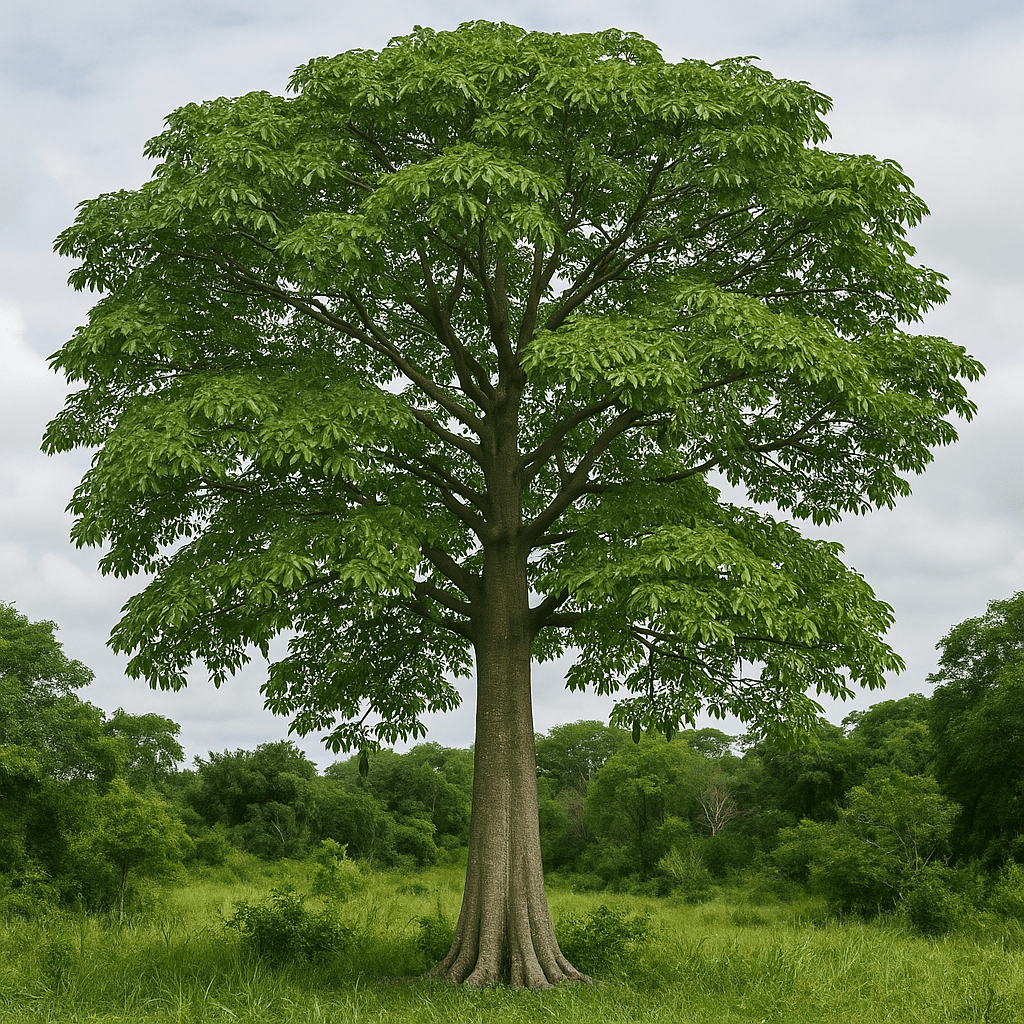
Berlinia grandiflora is a deciduous, woody, leguminous tree primarily native to the forest galleries, savannas, and rocky slopes of tropical West and Central Africa. It is recognized for its high socio-economic value as a timber source and for the medicinal and food uses of its bark and seeds.
The bark, leaves, and roots are widely used in traditional medicine to treat infections, intestinal worms, pain, fever, liver problems, gastrointestinal disorders, and wounds.
Its seeds are eaten as beans or used as seasoning in parts of Cameroon and Nigeria and are valued for their nutritional fat content.
The bark and pods are used for rope-making, household tools, and pot-cleaning nets, and the tree is preserved in farms and plantations for shade and cultural utility.
The tree is best propagated through stem cuttings from young shoots, which root successfully in soil–sawdust mixtures within about six weeks.