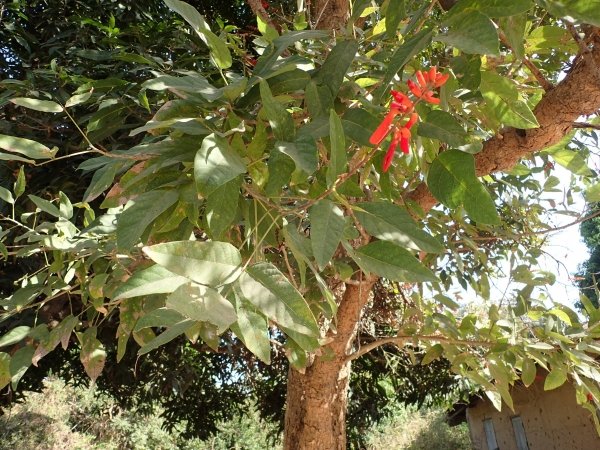
Erythrina senegalensis is a deciduous, thorny tree native to West Africa, known for its vibrant red flowers and extensive use in traditional medicine. It thrives in savannas and wooded grasslands, playing a significant role in ecological soil nitrogen fixation.
The bark, leaves, and roots are used to treat malaria, fever, gastrointestinal disorders, respiratory infections, women’s reproductive issues, wounds, jaundice, snake bites, and gonorrhea, with confirmed anti-inflammatory, analgesic, antimicrobial, and antioxidant properties.
Bark and leaves are sometimes added to soups for postpartum care, seeds are used for necklaces and game counters, and the bark is occasionally chewed as an aphrodisiac (raw seeds are toxic).
Considered sacred in some cultures, it is planted near homes for protection, and its red seeds are used in traditional rituals.
Erythrina senegalensis propagates easily from woody cuttings and grows well in drought-prone, disturbed areas and woodland