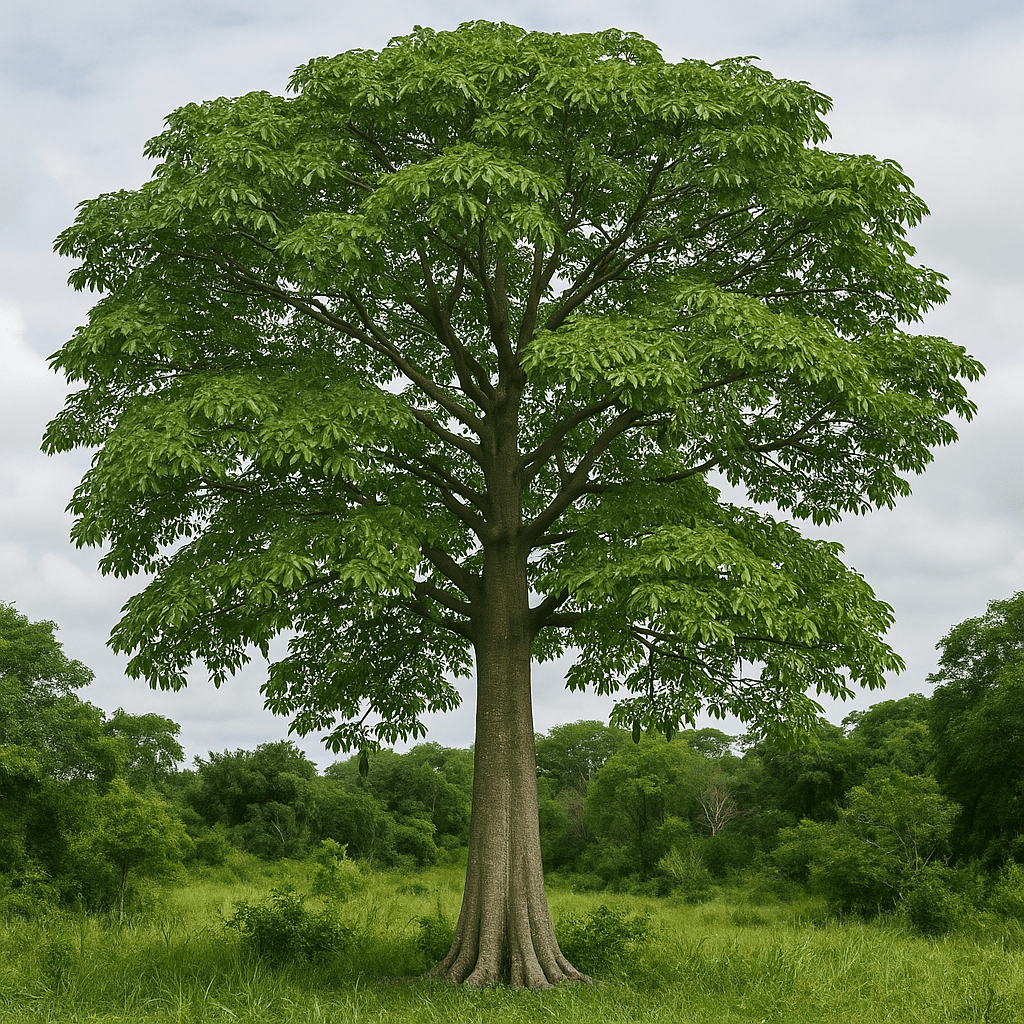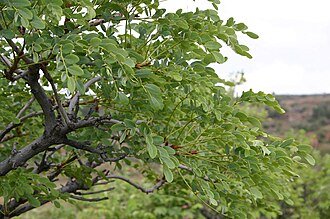
Burkea africana is a multipurpose deciduous, medium-sized, flat-topped tree belonging to the Fabaceae family, widely distributed in tropical and subtropical Africa. It is highly regarded for its medicinal properties, timber, and food resources.
Bark, roots, leaves, and twigs are used to treat fevers, malaria, digestive issues, skin diseases, epilepsy, and dental problems, with antioxidant and anti-infective properties.
Leaves feed edible caterpillars, young leaves and flowers are eaten as vegetables, and the bark resin or gum is sometimes consumed as a snack.
The bark is used in dyes, as fish poison, and in traditional medicinal or ritual concoctions, while the wood is valued for furniture, flooring, railway sleepers, poles, and iron smelting.
Propagation is mainly by seeds, which require scarification or acid treatment to improve germination; seedlings need shaded, well-drained soil, and natural regeneration occurs via coppicing.