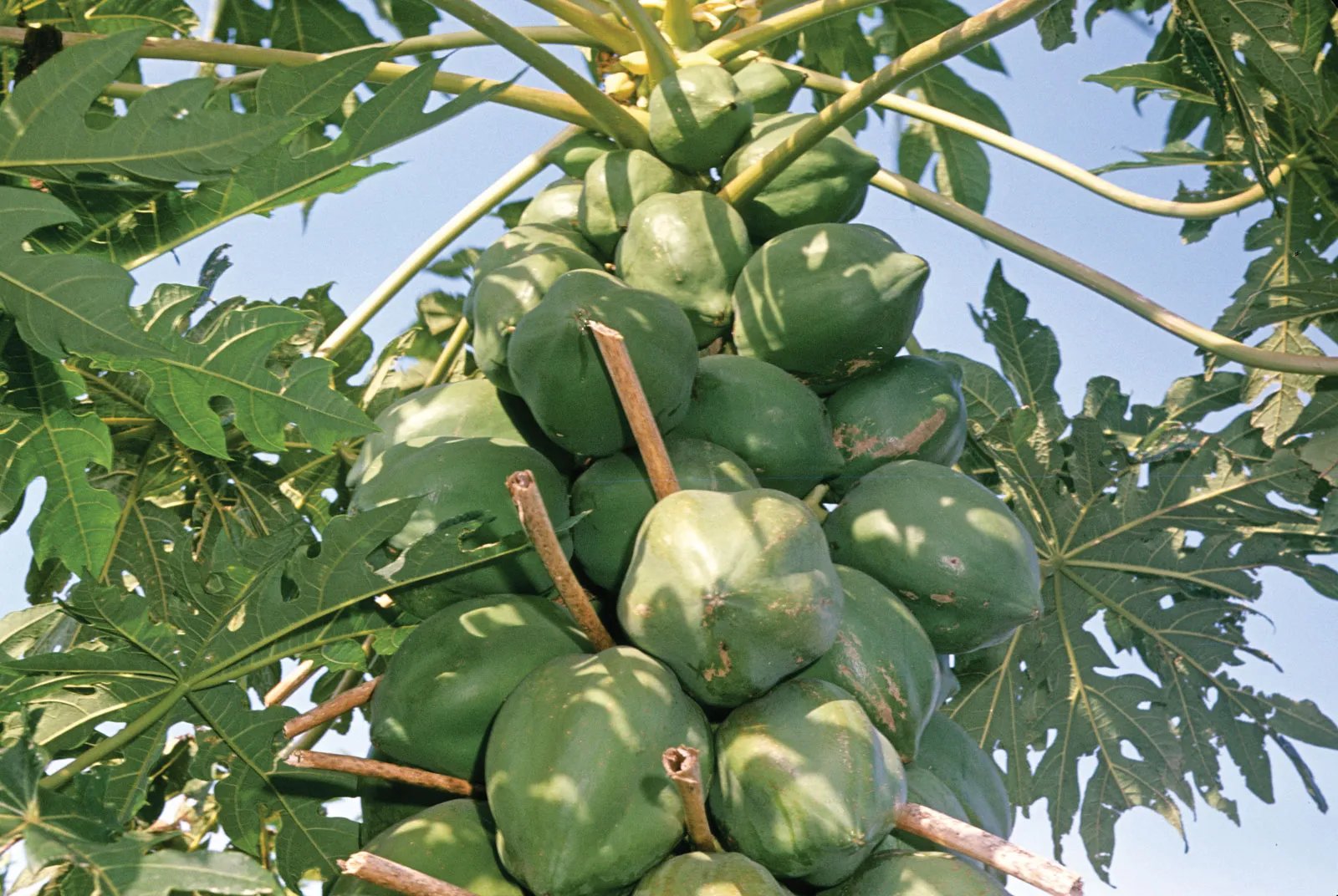
Carica papaya L. is a versatile, fast-growing tropical plant within the Caricaceae family, cultivated globally for its nutritional fruit and extensive medicinal applications.
Leaves, seeds, fruit, roots, and latex are used to treat dengue fever, digestive issues, worms, wounds, respiratory problems, inflammation, and, traditionally, for contraceptive purposes.
Ripe fruit is eaten raw, unripe fruit is cooked in soups and salads, leaves and flowers are consumed as vegetables, seeds are used as a spice, and the fruit is processed into jams, jellies, and meat tenderizers.
Carica papaya is planted for protection, used in traditional rituals and ceremonies, and incorporated into herbal mixtures with cultural significance, while unripe fruit and latex are cautioned against in pregnancy.
Propagation is mainly by seeds, with vegetative methods like cuttings, grafting, or tissue culture used to maintain desirable traits.