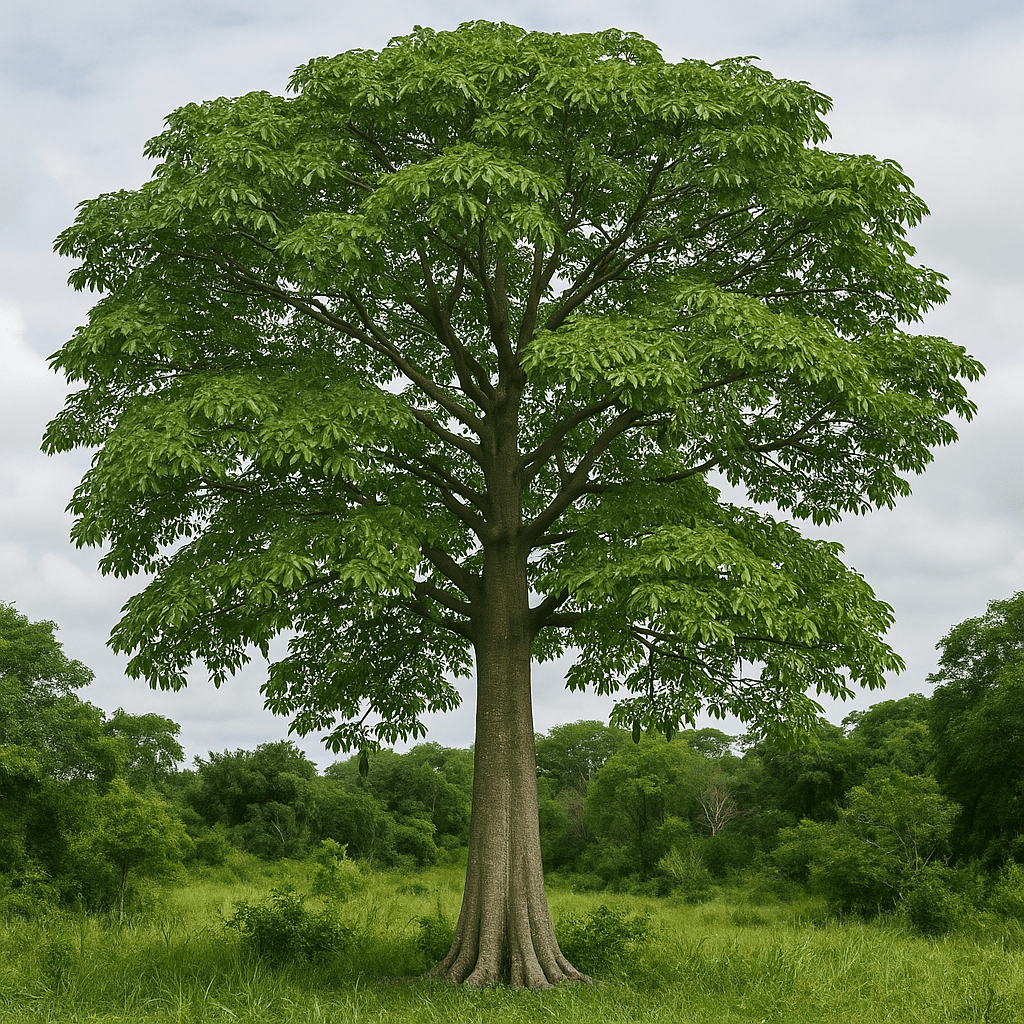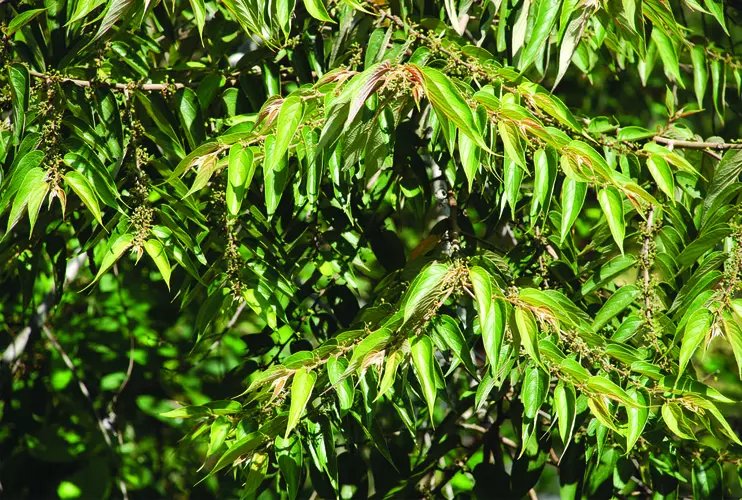
Trema orientalis is a fast-growing, short-lived pioneer tree widely found in tropical regions, thriving on disturbed and poor soils. The tree has rough, serrated leaves, small inconspicuous flowers, tiny fleshy drupes, smooth grey bark, and grows very rapidly to medium height.
Various parts of Trema orientalis are traditionally used to treat respiratory, digestive, inflammatory, skin, and infectious conditions, with proven antimicrobial and antioxidant potential.
Its young leaves are eaten as a vegetable, fruits are edible though mainly wildlife-consumed, and the protein-rich foliage serves as valuable livestock fodder.
The wood is culturally important for charcoal, fire-starting, fiber production, fencing, and ritual medicinal practices across several African communities.
As a nitrogen-fixing pioneer species, Trema orientalis is vital for land restoration and agroforestry, though it can become invasive and cause mild skin irritation in some people.