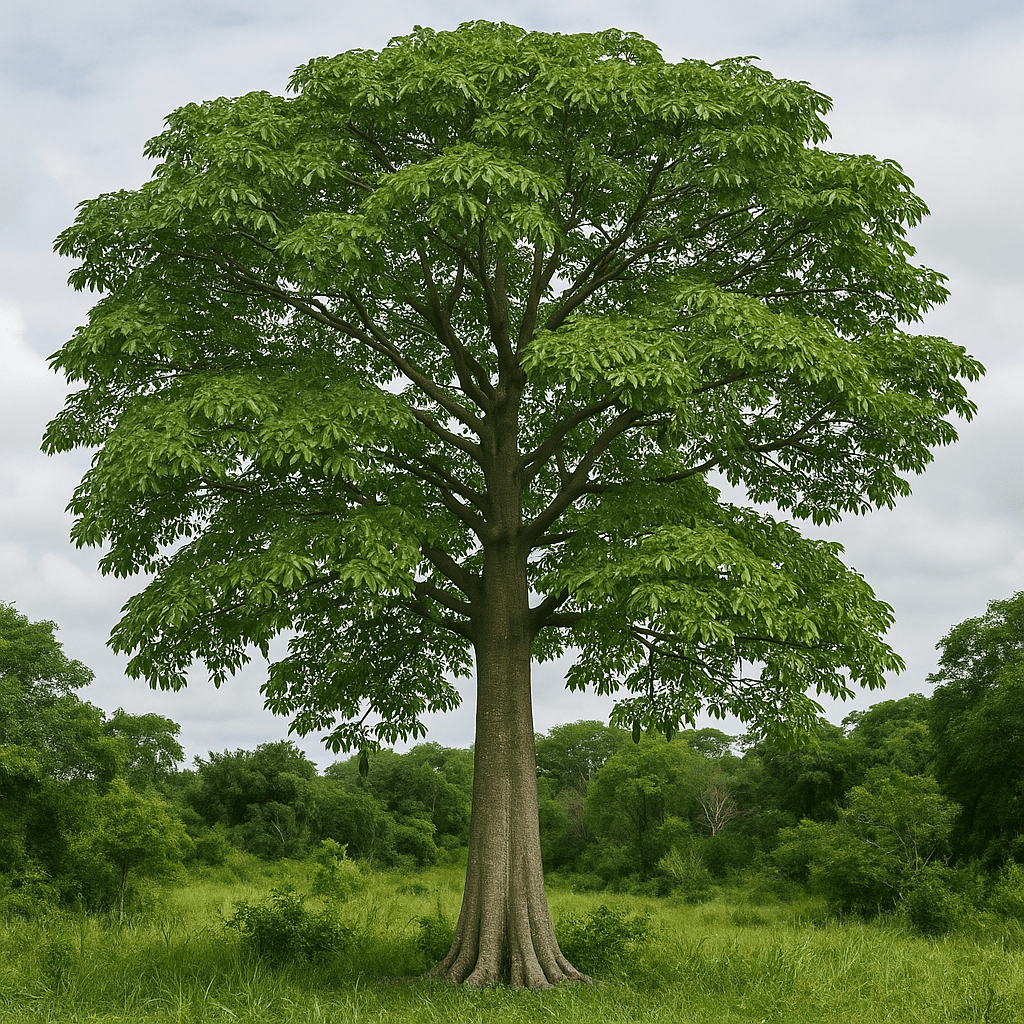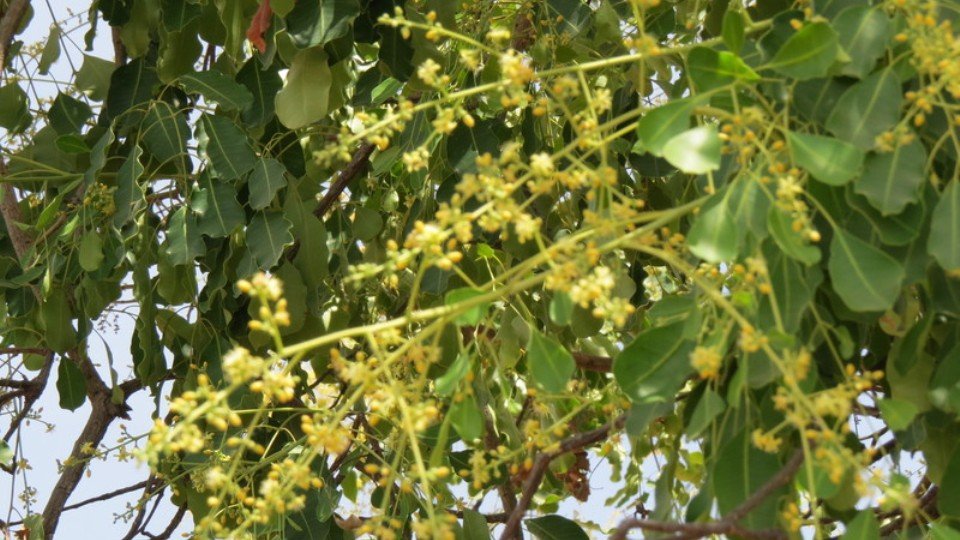
Quassia undulata is a bitter, quassinoid-rich tree of West and Central Africa, widely used in traditional medicine and valued ecologically as a fire-resistant savanna species. The plant is a fast-growing shrub or medium-sized tree with smooth grey bark, compound leaves, small white flowers, and dark purple-black drupes.
The bark, roots, and stems are intensely bitter and traditionally used to treat malaria, fever, digestive disorders, infections, and certain neurological or musculoskeletal conditions, supported by bioactive quassinoids.
Although not a staple food plant, parts of the fruit and seed cake are occasionally consumed, while the oil-rich seeds are used for soap, cosmetics, insecticides, and biodiesel.
The plant plays a role in traditional treatments for mental or spiritual afflictions and in infant care practices aimed at preventing infections.
Quassia undulata thrives in sunny savanna habitats and is propagated by fresh seed with rapid germination, but is rarely cultivated beyond traditional use.