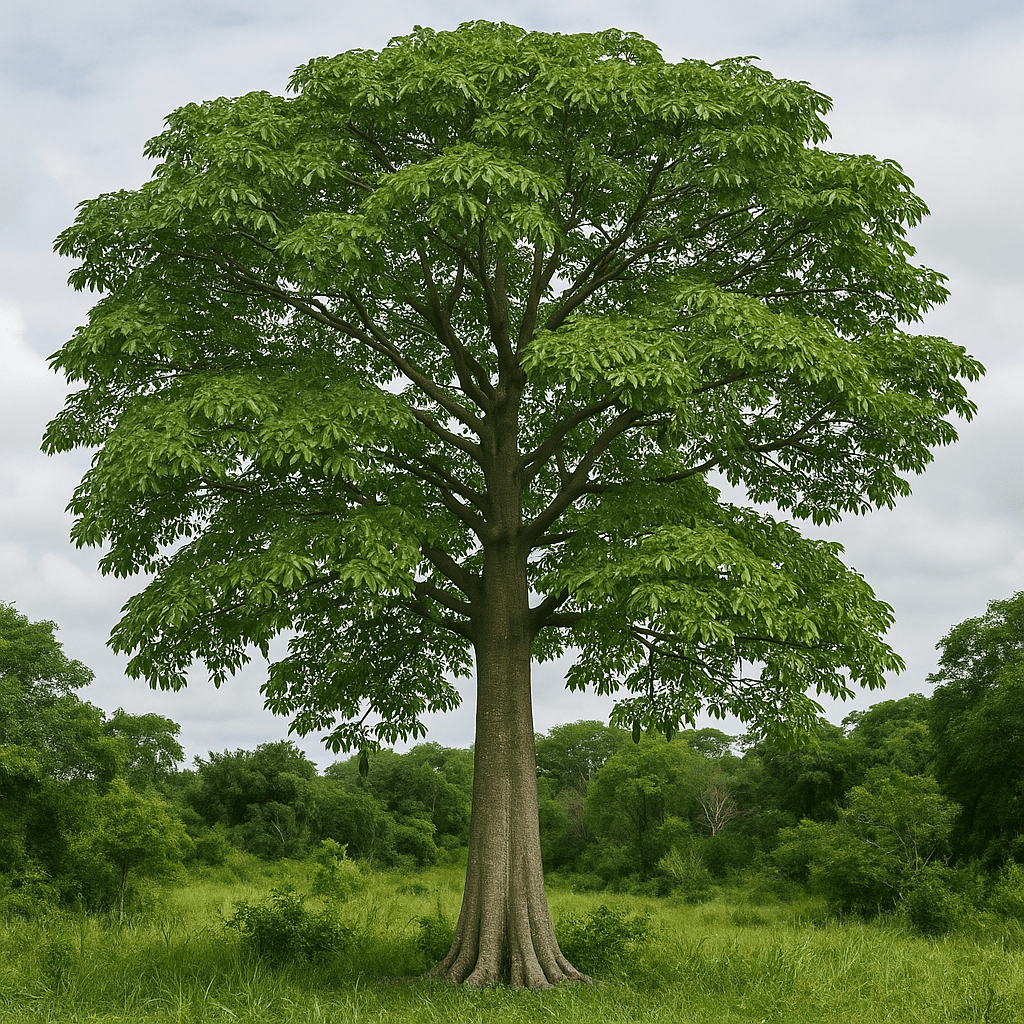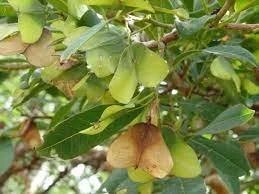
Hymenocardia acida is a deciduous savanna shrub or small tree of tropical Africa, notable for its sour leaves and bark and its wide application in traditional medicine. The plant is a small, often crooked tree with flaking bark exposing reddish inner layers, sour-tasting leaves, small unisexual flowers, and distinctive V-shaped winged fruits.
The bark, roots, and leaves are extensively used to treat pain, fever, malaria, gastrointestinal disorders, respiratory infections, skin diseases, sickle cell anemia, and gynecological conditions
Young sour leaves are eaten as vegetables or condiments, while immature fruits are occasionally consumed, mainly by children.
The species has ritual significance for protection and hunting charms, and its bark, wood, and twigs are used for dyeing, tanning, construction, fuel, and oral hygiene.
Mostly wild-harvested, H. acida is fire-resistant and ecologically valuable for erosion control, shade provision, and pollinator support in savanna landscapes.