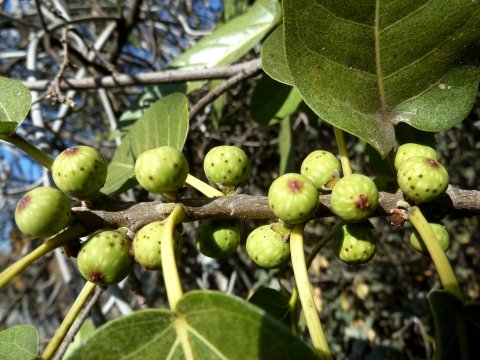
Ficus ingens is a hardy African fig species notable for its striking red young leaves, rock-splitting growth habit, and ecological importance in dry, rocky landscapes.
Different parts of the plant are traditionally used to treat anemia, gastrointestinal disorders, malaria, and infections, with studies indicating antioxidant, analgesic, and hepatoprotective properties.
The figs are edible and sometimes used as famine food, though they are generally less palatable to humans while being an important food source for wildlife.
The tree has strong cultural significance, famously exemplified by the historic “inhabited fig tree” of South Africa, which once supported multiple dwellings.
Ficus ingens thrives in sunny, dry, rocky environments, is drought- and frost-tolerant once established, and should be planted away from structures due to its invasive root system.