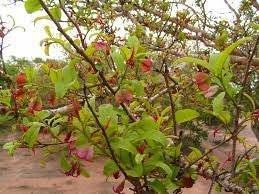
Hymenocardia acida is a small African shrub or tree valued for its sour-tasting leaves and fruits, with extensive traditional medicinal uses including anti-sickling, gastrointestinal, and respiratory remedies.
Leaves and bark are used for sickle cell disease, gastrointestinal disorders, respiratory infections, headaches, rheumatism, skin diseases, fever, jaundice, hypertension, menstrual pains, and as an antidote for poisoning.
Young fruits are eaten by children; young leaves and shoots can be used as a vegetable; foliage serves as livestock fodder and is eaten by edible caterpillars in DR Congo.
Used in traditional medicine, magical healing, and as a hunter’s charm; considered helpful in psychosocial and convulsive disorders.
Found in savanna, shrubland, and deciduous woodlands from Senegal to Zimbabwe; fire-resistant, grows on sandy, loamy, or clay soils; propagated from seed and primarily collected from the wild; threatened by overharvesting.