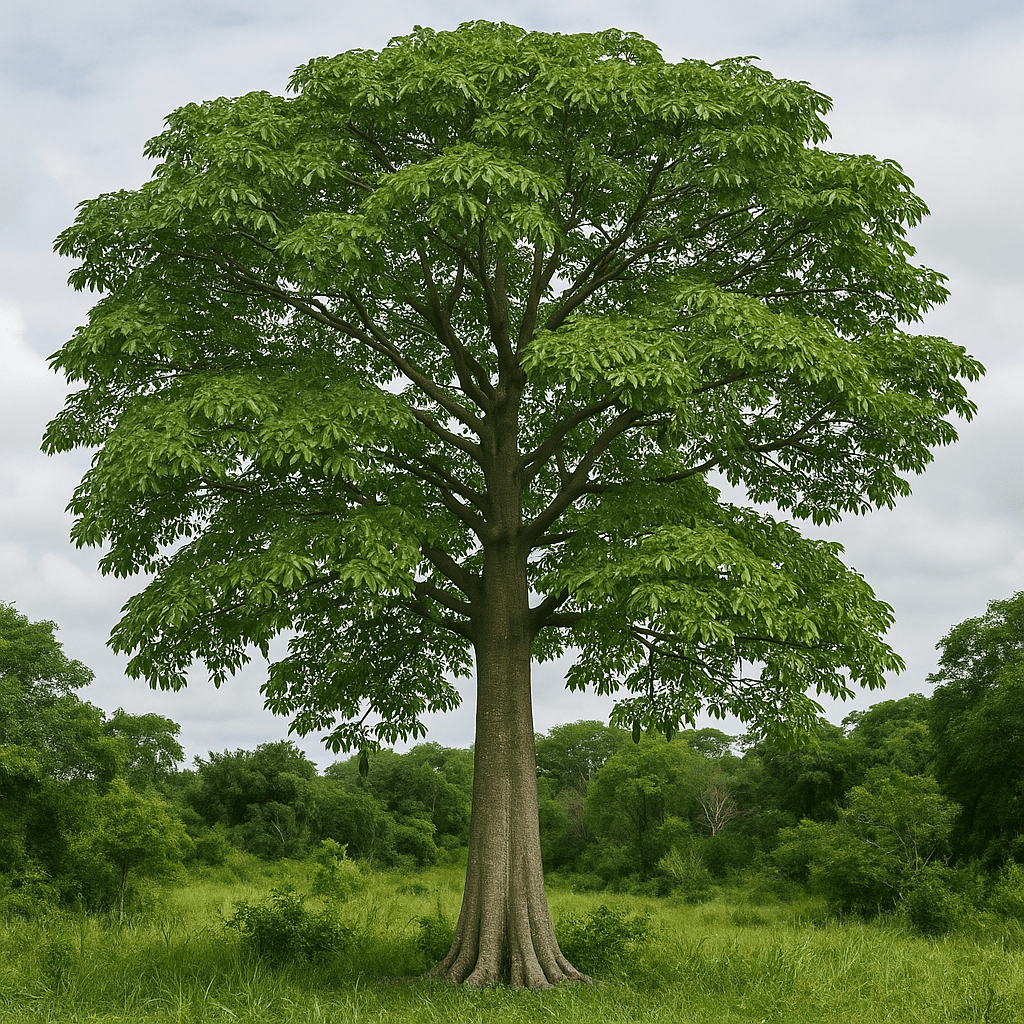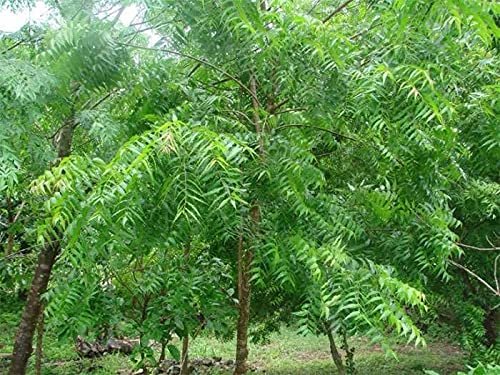
Neem is a fast-growing, medium-to-large evergreen tree (15–30 m) with compound leaves, thick grey bark, fragrant white or pale yellow flowers, olive-like yellow-green fruit, and sticky sap in old trees.
Used in Ayurvedic and Unani medicine for oral care, skin conditions, parasitic infections, digestive health, and fever; contains over 140 bioactive compounds. Raw oil can be toxic to children and prolonged use may harm kidneys/liver.
Young leaves and flowers are eaten in India and Southeast Asia, in dishes like nim begun bhaja or veppam pū cāṟu, and used in salads or to temper bitterness.
Neem is used in Hindu festivals, as home protection from evil or infection, and has spiritual significance associated with goddess Shitala.
Hardy and drought-resistant, neem grows in tropical/sub-tropical regions, tolerates poor soils, prefers full sun, propagates from seeds or cuttings, grows very fast, but can be invasive outside native areas.