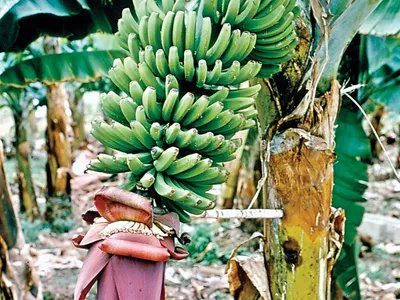
A large herbaceous perennial (3–9 m) with a succulent pseudostem, massive glossy leaves, pendulous inflorescences, elongated seedless fruits that ripen yellow and sweet, and reproduces via suckers.
Unripe fruit and peel treat diarrhea and dysentery; leaves for wound dressing; flowers for diabetes; roots for urinary issues; stem juice for high blood pressure and snakebites; peel has antioxidant properties.
Ripe fruits eaten raw or in desserts; unripe fruits cooked or fried; banana flour used for thickening and digestion; leaves used for wrapping and steaming food.
Sacred in India and Southeast Asia; used in religious ceremonies, festivals, weddings, and offered to deities to symbolize fertility and prosperity.
Thrives in hot, humid tropics; propagated via suckers; planted 2–3 m apart; requires well-drained fertile soil, irrigation, and mulching; fruits in 9–10 months with ongoing production up to 20 years.