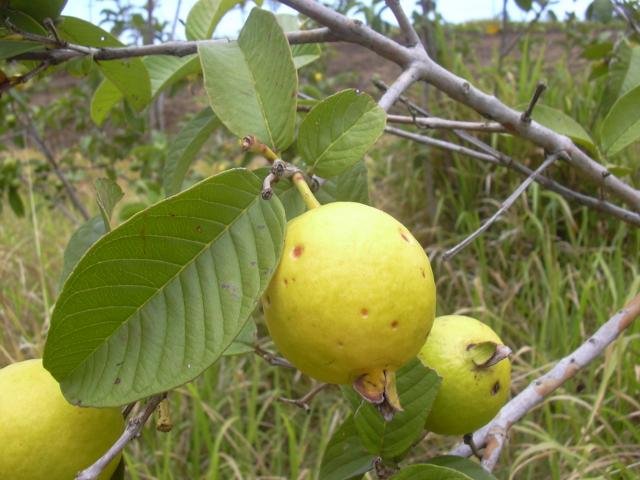
A fast-growing evergreen tree/shrub (3–10 m) with thin coppery bark, opposite leathery leaves, fragrant white flowers, and round to pear-shaped fleshy fruits with numerous seeds.
Leaves, bark, roots, and fruit used to treat diarrhea, dysentery, diabetes, respiratory issues, wounds, oral health problems, and menstrual disorders, thanks to bioactive compounds like flavonoids and tannins.
Fruits eaten fresh, in salads, juices, jams, jellies, marmalades, preserves, and smoothies; young leaves sometimes used as medicinal tea.
Used in traditional medicine and cleansing rituals, leaves as livestock fodder, and wood for tools, posts, firewood, and smoking meat.
Thrives in tropical/subtropical climates, adaptable to various soils, propagated via cuttings, grafting, or seeds, spaced 5–6 m apart, drought-resistant, pruned for fruiting, and begins bearing in 2–3 years.