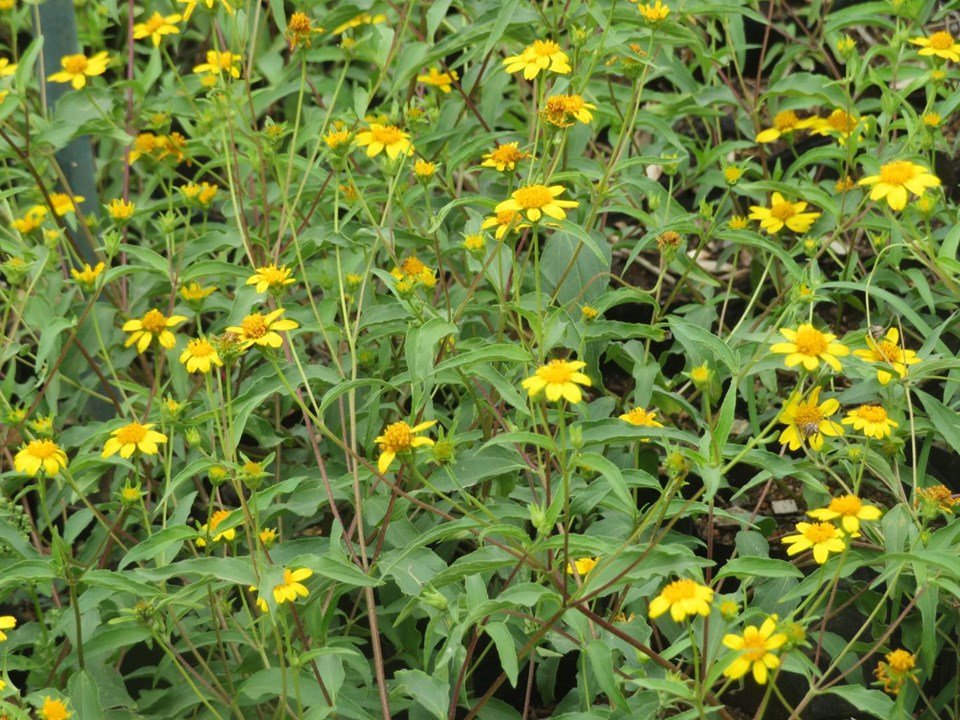
A semi-woody perennial herb (0.6–2 m) with quadrangular bristly stems, opposite lanceolate leaves, bright yellow daisy-like flowers, 4-angled fruits, and a characteristic “carroty” aroma.
Famous for stopping bleeding and healing wounds; also used for inflammation, pain, respiratory infections, gastrointestinal disorders, women’s health, eye care, anti-poison, and shows anticancer potential.
Leaves occasionally used in soups; highly valued as protein-rich fodder for livestock (cattle, sheep, goats, rabbits).
Used in cleansing rituals, protection ceremonies, love charms, and symbolic gender associations in certain African cultures.
Thrives in tropical/subtropical climates on well-drained soils, propagated via seeds, fast-growing pioneer species, enhances soil fertility; contraindicated in pregnancy and excessive long-term use due to reproductive toxicity.