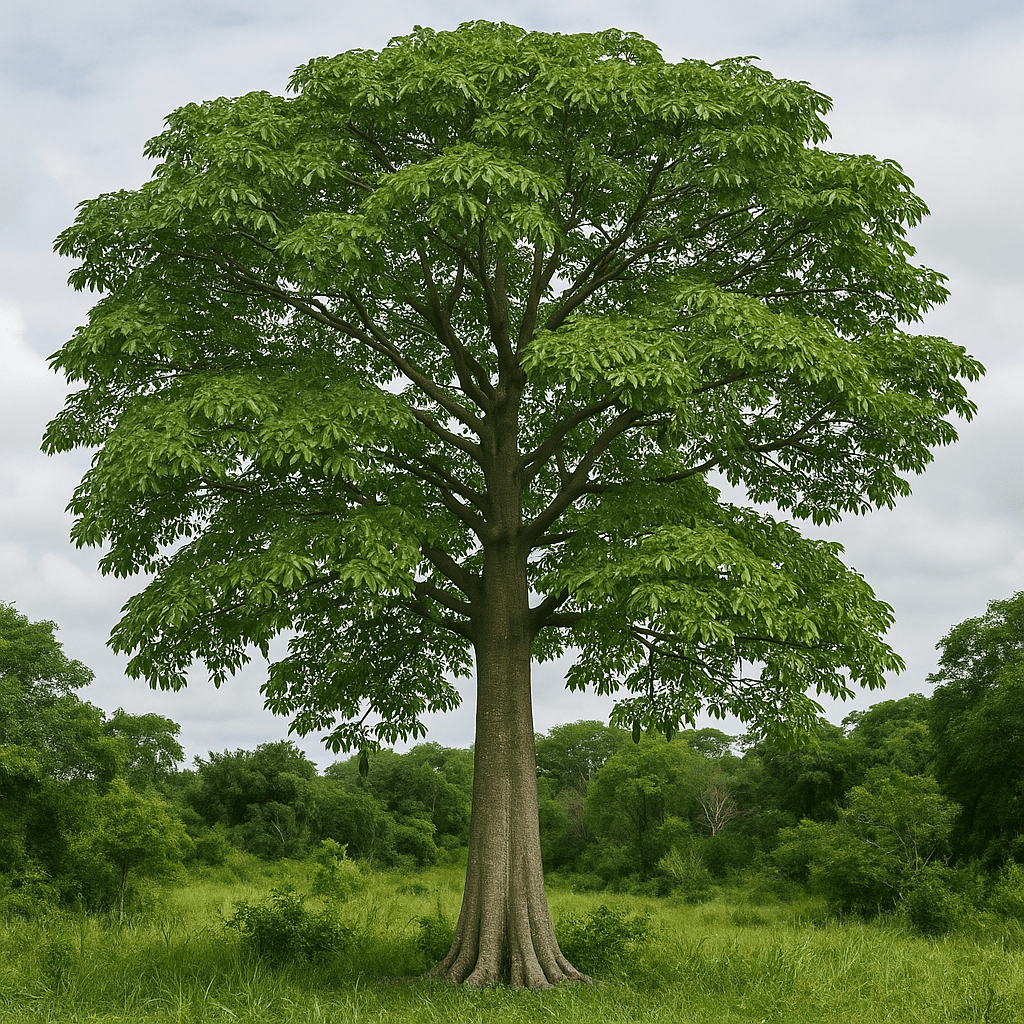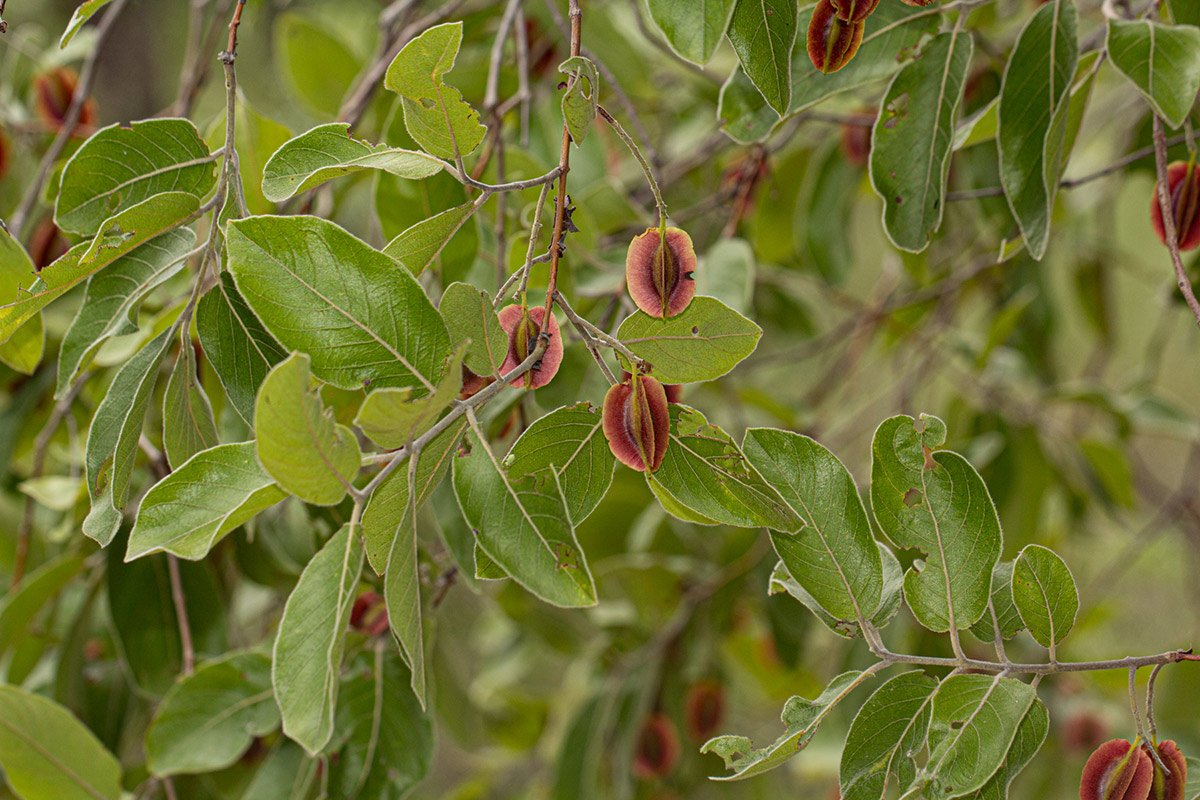
A small to medium deciduous/semi-deciduous tree (3–10 m) with velvety young leaves, rough fissured bark, small yellow-green flowers in axillary spikes, and distinctive four-winged fruits; grows in savannas, rocky areas, and hillsides.
Used for wound healing, skin infections, gastrointestinal disorders, respiratory ailments, snakebites, malaria, obstetric care, oral hygiene; shows antimicrobial, anti-inflammatory, and antidiarrheal activity.
Leaves serve as livestock fodder; limited direct human consumption, sometimes included in medicinal decoctions.
Smoke or bark used in rituals for courage, ceremonial child protection, and some taboos on wood use.
Propagated by seeds, root suckers, or truncheons; fast-growing, responsive to pruning/coppicing; prefers deep, well-drained soil, protected from drought/frost early on; susceptible to Ceratocystis stem cankers.