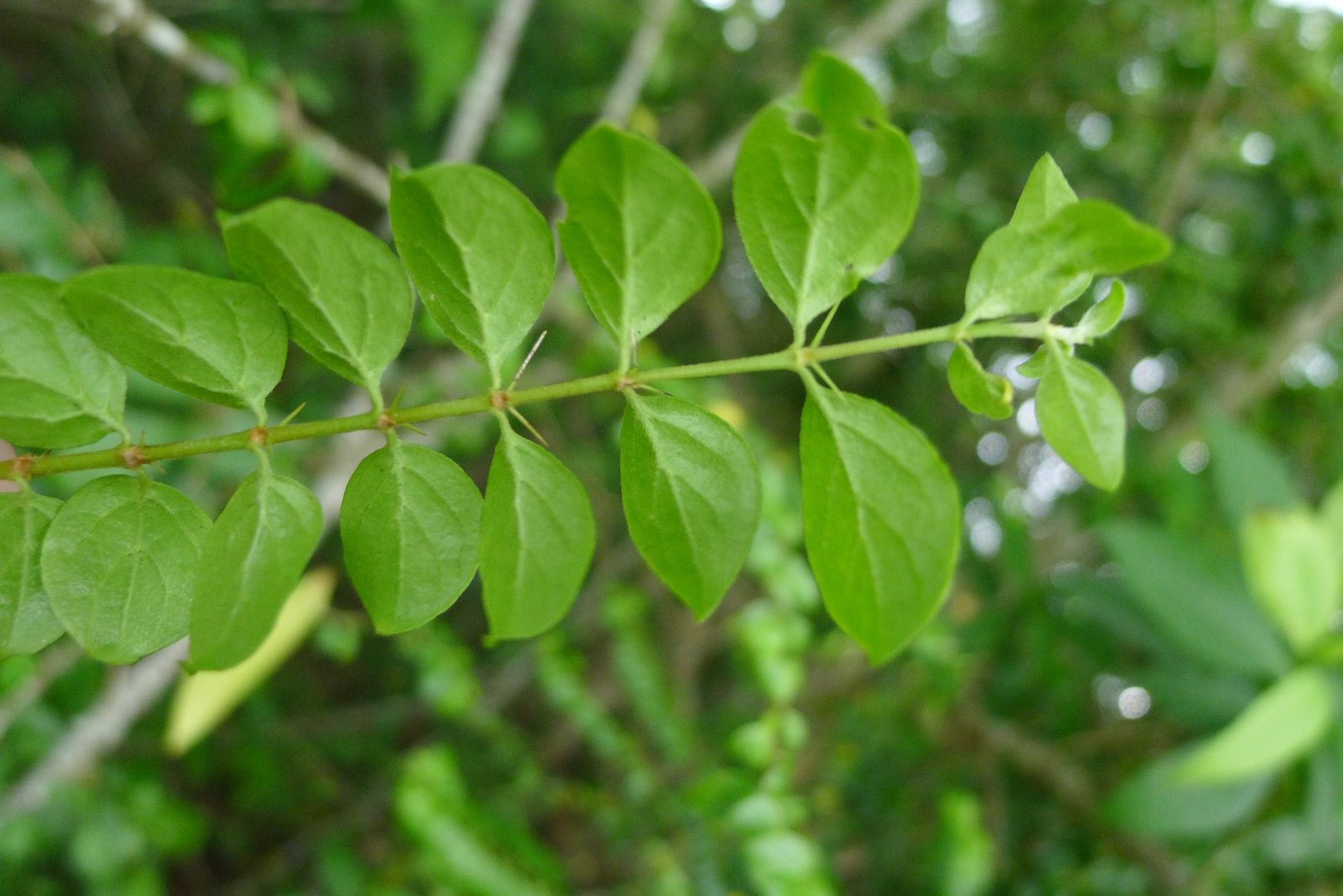
Canthium species are thorny shrubs or small trees with opposite leaves, stiff supra-axillary spines, small fragrant flowers, and lobed drupaceous fruits, commonly found in dry tropical habitats.
Canthium is widely used in traditional medicine to treat digestive disorders, fevers, infections, metabolic diseases, pain, inflammation, parasitic infections, and snake bites using its roots, leaves, bark, and fruits.
The ripe fruits and young leaves of some Canthium species are edible, nutritionally valuable, and traditionally consumed fresh, cooked, or processed into jellies.
Various Canthium species are used in spiritual protection, fertility rituals, pregnancy care, and ceremonial smoke inhalation practices in African and Asian traditions.
Although mostly wild, Canthium can be cultivated from seeds in dry, well-drained soils with full to partial sunlight, though it is slow-growing and prone to fungal attack.