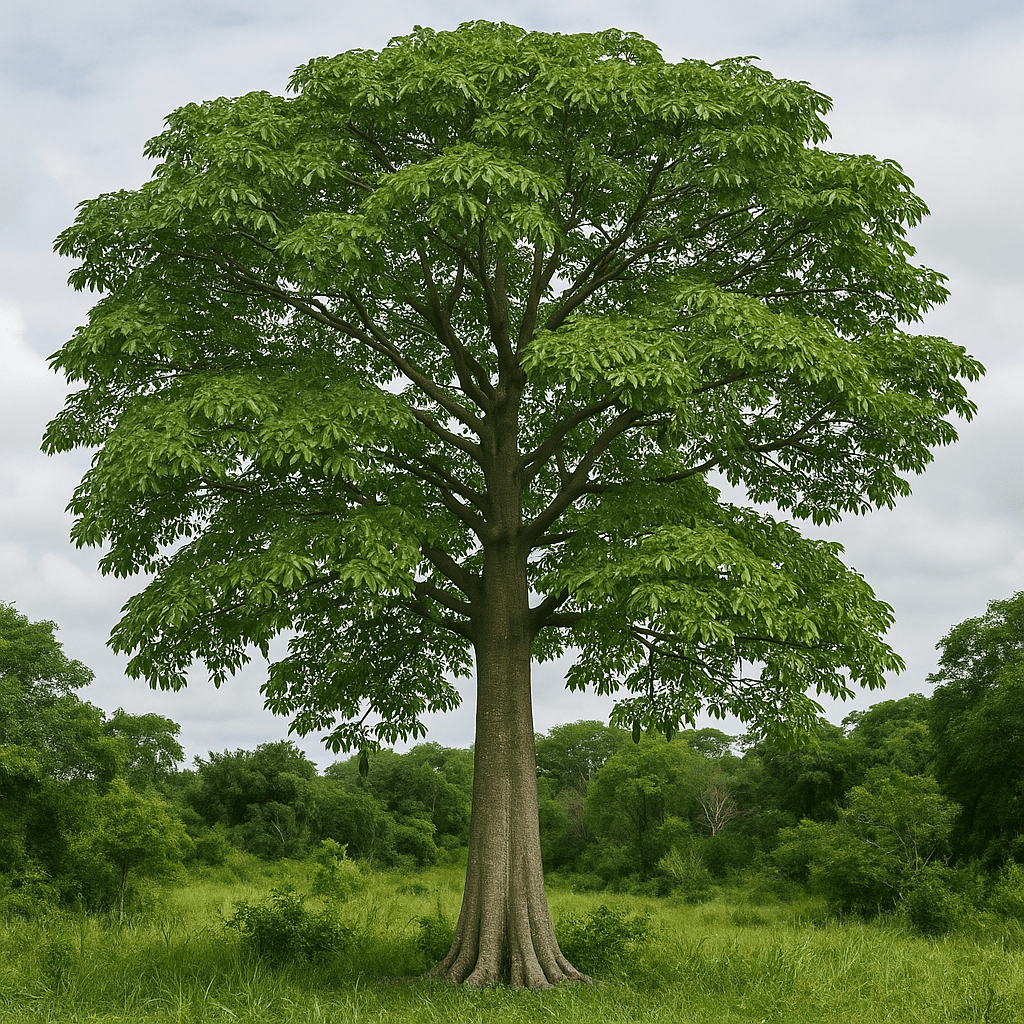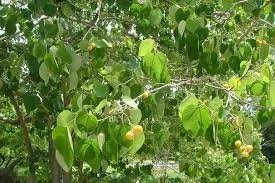
Gmelina arborea is a tall deciduous tree with a straight trunk, shedding pale bark, large heart-shaped leaves, fragrant yellow flowers, and edible yellow-orange drupes.
All parts of the tree are used in traditional medicine as tonics, laxatives, anti-inflammatory agents, wound treatments, and remedies for fever, digestive disorders, skin diseases, and blood ailments.
Its ripe fruits are eaten, flowers are cooked with rice in traditional dishes, and the leaves serve as nutritious fodder for livestock.
The tree holds cultural and sacred value, with its wood used for traditional musical instruments and its flowers featured in festive foods.
Gmelina arborea is a fast-growing, seed-propagated tree suited to warm, humid climates and fertile soils, widely planted for timber, shade, and plantation use due to its strong coppicing ability.